

How can we detect if a planet or moon has the potential to harbour life? A new expertise network funded with 690 kEuro by the Netherlands Space Office will allow a consortium of Dutch researchers to find out during the next five years. The involvement of various researchers of the Planetary Exploration group illustrates the […]

The European Research Council (ERC) has announced the ERC Starting Grants for young researchers. One of them is joining the Planetary Exploration group at TU Delft: Edgar Steenstra to study volcanic processes on Venus. The European grant of € 2,228,075 for a five-year research programme is intended to enable Steenstra to build his own teams […]

August is the best month in the year for viewing meteors. The Perseid meteor shower will peak during the weekend of 12-13 august, with little interference from the moon. Where can you find the best viewing spot? Sebastiaan de Vet tried to find out by creating a new map. The amount of visible meteors depends […]

Last week, Nick Oberg appeared in newspaper NRC with an article about his study of the formation of moons, particularly those of Jupiter. On 5 June, he successfully defended his PhD thesis and obtained the distinction cum laude. “My thesis is mainly about the formation of Jupiter’s icy moons. They contain oceans of liquid water and are […]

Bright fireballs streaking across the Dutch skies suggest that every two years on average a new meteorite is dropped in the Netherlands. Finding them back is notoriously difficult and TU Delft researcher Sebastiaan de Vet now plans on searching for them using drones. What better way to use the aerial vantage point of a drone […]

How dark are the starry skies above the campus in Delft? To find out researcher Sebastiaan de Vet and technicians installed a sky quality sensor at the Rooftop Laboratory of the Faculty of Aerospace Engineering. It is part of the national network ‘Was het donker’ (“Was it dark?”), which measures the sky brightness across the […]
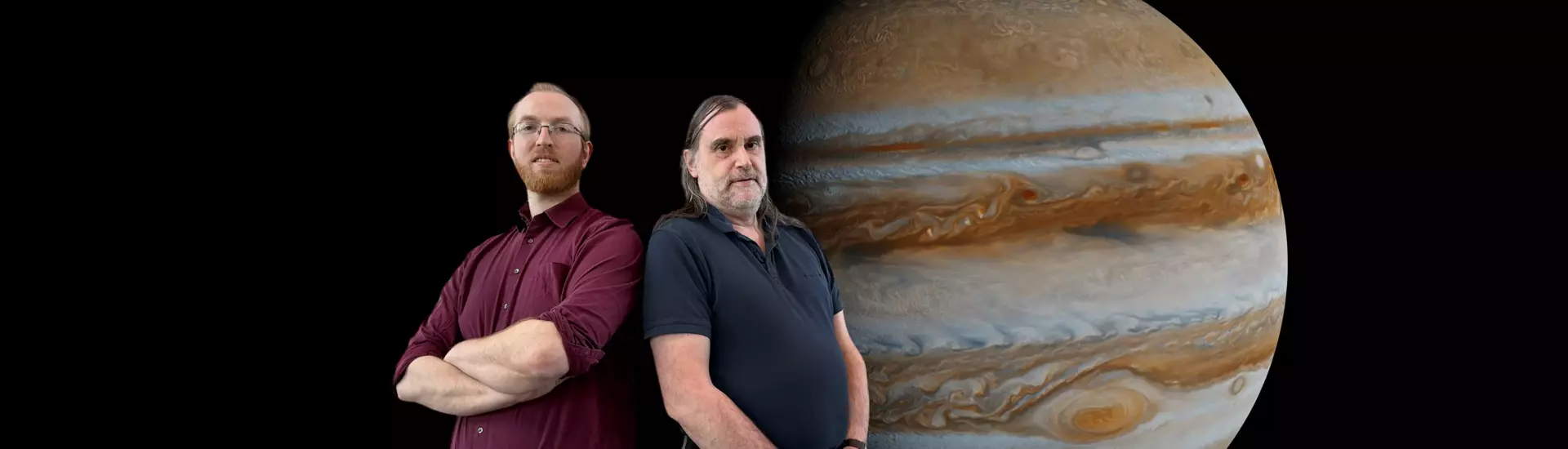
A grand odyssey of exploration is about to begin. Humankind’s next bold mission to the outer solar system. ESA’s Jupiter Icy Moons Explorer (Juice), is poised to explore giant planet Jupiter and its largest moons. After years of preparations, Juice will be launched into space on April 13 from Europe’s Spaceport in French Guiana. The […]
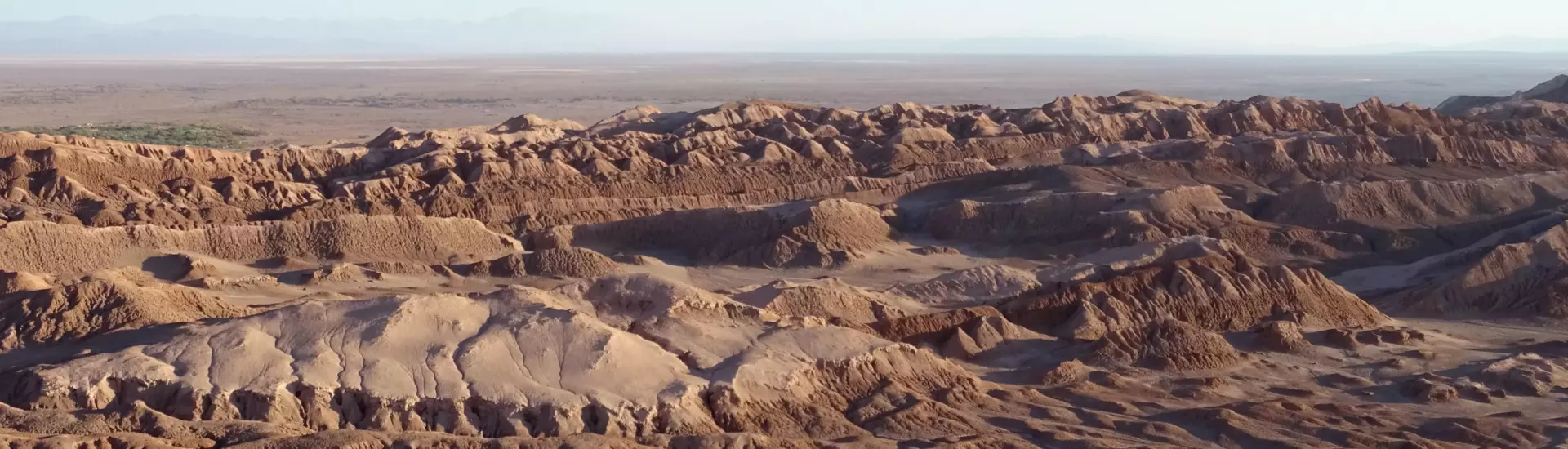
What can planetary science on the bone dry Mars teach us? What happened to its atmosphere? And, are there possible fall-back options for humankind on Earth? In context of the National Climateweek, we spoke with Sebastiaan de Vet, planetary scientist at TU Delft. “If we look at planets and see how on planetary scale climate […]

The coordination of the Dutch branch of the allsky fireball camera network ‘FRIPON’ has been handed over from ESA-ESTEC to the TU Delft. In a formal event ESA-scientist Detlef Koschny handed over the network to its new coordinator Sebastiaan de Vet of the section Astrodynamics & Space Missions. Scientific purpose FRIPON (Fireball Recovery and InterPlanetary Observation […]

In preparation for the upcoming research visitation, the Faculty of Aerospace Engineering had a video made for each department in which you pay a virtual visit to – almost all of their – labs at the faculty. But: the videos will be used for many more purposes: think of recruiting or ‘onboarding’ new employees and […]

Whether they look down at earth, to the side at our solar system, or up into deep space, satellites are ingenious packages, jam-packed with technology, that help in answering all kinds of scientific questions. Right at this cutting edge of science and technology, the new Leiden-Delft-Erasmus minor Space Missions is for any science student with […]

Sebastiaan de Vet and Stephanie Cazaux have made a new, virtual teaching collection of digital 3D models of meteorites and impact rocks: the ‘Delft Meteorite Lab.’ The first part of the collection is already online: photorealistic models of meteorites, impact rocks and other objects that were created using photogrammetry, where images were used to reconstruct […]

The European Space Agency (ESA) has selected the Venus orbiter EnVision as the fifth medium-class mission within its Cosmic Vision program. It marks the beginning of a new era of Venus exploration—last week NASA already announced two new missions to Earth’ sister planet. SRON and TU Delft are part of the EnVision consortium. The spacecraft […]

On Thursday, June 10, a partial solar eclipse was visible from the Netherlands. Planetary researchers Sebastiaan de Vet and Stephanie Cazaux therefore took to the streets in front of the faculty with their telescopes as a ‘pop-up’ observatory to observe the eclipse with passing students and staff. During maximum 29% of the Sun’s diameter was […]

On Tuesday March 2, Marie Fayolle won the fourth Heinz Stoewer Space Award for her MSc thesis entitled “Geodetic parameter estimation for small-satellite small-body mission”. This year, Prof. Heinz Stoewer himself handed over the prize to Marie Fayolle at the VSV Symposium 2021. The prize is awarded each year to an MSc student or young […]

Researchers of the faculty of Aerospace Engineering at TU Delft are involved in four of the eight new projects that will start within the Dutch planetary and exo-planetary programme ‘PEPSci’. That was decided by the NWO Domain Science Board last month. The projects include research into the icy moon Enceladus, the properties of exomoons and […]